
Breast Augmentation
Breast augmentation (augmentation mammoplasty) is a highly customized surgical procedure aimed at enhancing the size, shape, and overall proportions of the breasts using implants or fat transfer.
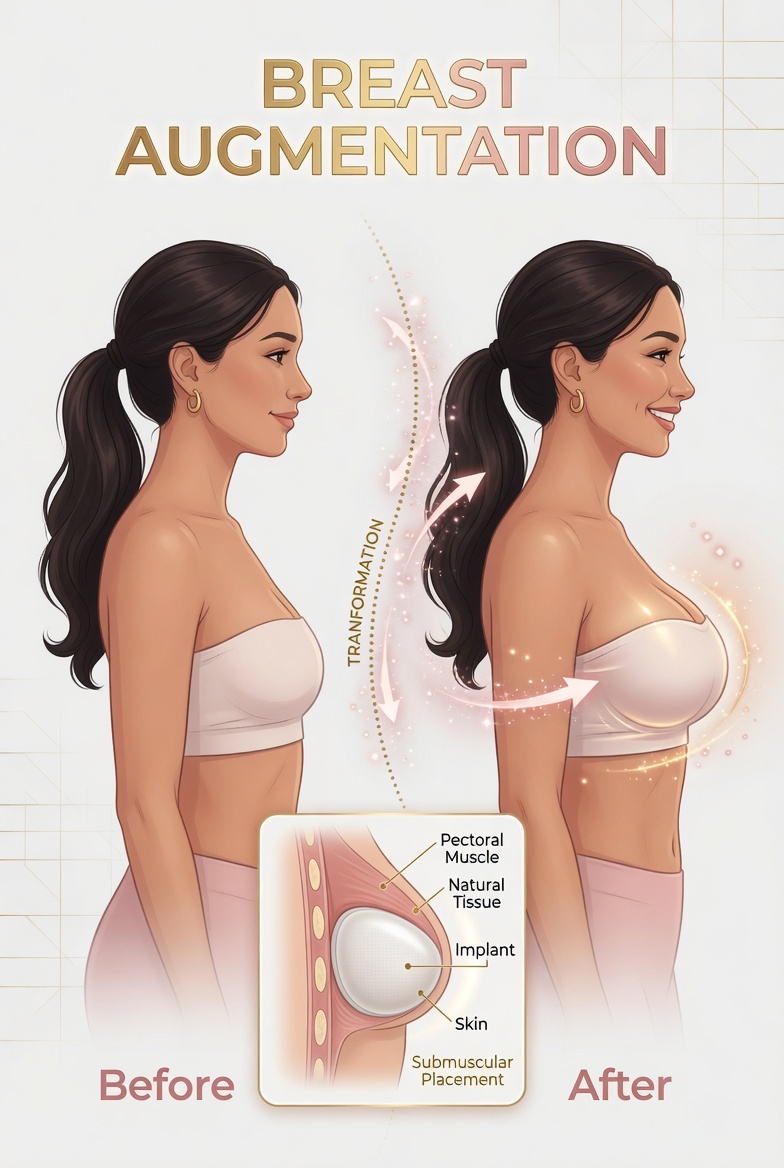
Understanding the Procedure
Whether you're looking to restore volume lost after pregnancy or weight loss, correct asymmetry, or simply achieve a fuller cup size, breast augmentation is consistently one of the most popular and transformative aesthetic procedures worldwide.
The surgery is highly individualized. During consultation, patients choose from various implant types (such as cohesive gel "gummy bear" silicone or saline), shapes (round or teardrop), and placement options (above or below the pectoral muscle) to achieve their unique aesthetic goals.
Why Choose Breast Augmentation?
- ✅ Enhanced Volume: Achieves a fuller, more proportional breast size.
- ✅ Improved Symmetry: Corrects naturally uneven or asymmetrical breasts.
- ✅ Restored Shape: Rebuilds volume lost due to aging, weight loss, or breastfeeding.
- ✅ Increased Confidence: Empowers women to feel more comfortable in their clothing and bodies.
The Procedure Explained
Breast augmentation is typically performed as an outpatient procedure under general anesthesia. The surgical approach depends on your anatomy and the type of implants chosen.
1. Consultation
2. Anesthesia
3. Incision & Placement
4. Closing
Click a step above to see details.
Recovery Timeline
Recovery from breast augmentation requires patience as your body heals and the implants settle. Wearing a supportive surgical bra and adhering to movement restrictions is key to an optimal outcome.
Global Cost Comparison
The total cost of breast augmentation can vary dramatically based on the country, the surgeon's reputation, and whether you opt for saline or high-grade cohesive silicone gel implants.
*These are estimated market ranges. US/UK/Aus prices often do not include facility or anesthesia fees, whereas medical tourism prices in Turkey or India are frequently "all-inclusive" packages.
Frequently Asked Questions
Common queries regarding breast augmentation.
Silicone vs. Saline implants: Which is better?
Both are safe and FDA-approved. Silicone implants, particularly highly cohesive "gummy bear" gels, are generally preferred for their natural look and soft feel. Saline implants are filled with sterile salt water and require smaller incisions, but may ripple more visibly in women with very little natural breast tissue.
What is the "Drop and Fluff" process?
Immediately after surgery, implants typically sit high and tight on the chest wall. Over several weeks to months, the chest muscle relaxes and gravity takes effect. The implants "drop" into their proper pocket and "fluff" outwards, creating a softer, more natural teardrop shape.
Are the scars highly visible?
Incisions are strategically placed to minimize visibility. The most common locations are in the crease under the breast (inframammary), around the lower edge of the areola (periareolar), or in the armpit (transaxillary). With proper care, these scars fade significantly over time.
Do implants last a lifetime?
Implants are not considered lifetime devices. While many women keep the same implants for 15-20 years without issues, it is generally recommended to monitor them via MRI or ultrasound over time. Future surgeries may be needed to replace or remove them due to aging, shape changes, or complications like capsular contracture.